The method
How electrolysis works
Electrolysis has been used since 1875, and electrolysis devices are the ones the US FDA allows to be marketed for permanent hair removal (laser may only claim permanent hair reduction). Here is exactly what happens — and what to expect at Omega.
- Since 1875
- Permanent hair removal
- All skin & hair types
In simple words
Treating the root, not the surface
Every hair grows from a follicle that is fed by tiny blood vessels and growth cells at its base. Shaving, waxing, threading and creams remove only the visible hair, so it keeps coming back. Laser heats the pigment in the hair, which reduces growth but often lets hair return.
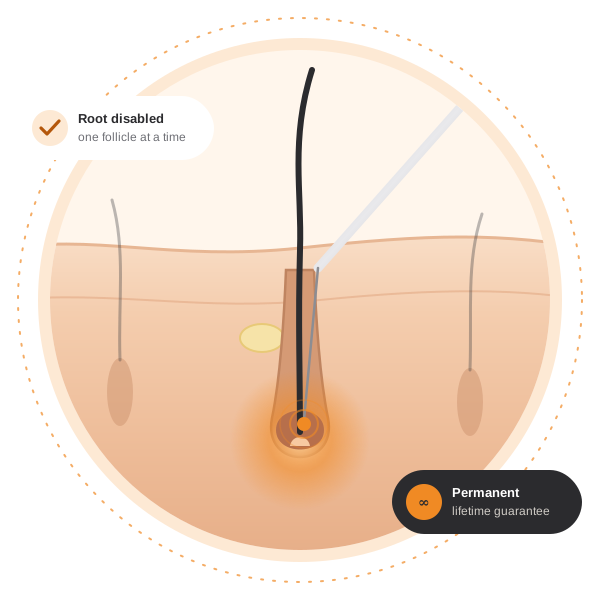
In electrolysis, a sterile probe as fine as a hair slides into the natural opening of the follicle. A tiny, precisely controlled current is released at the root, permanently disabling the cells that regrow the hair. The hair then slides out with no resistance.
See it up close
A real electrolysis session
This short clip shows an Omega 247 electrologist at work: gloved hands and a sterile, single-use probe guided into one follicle at a time.
Each hair is treated individually at the root, which is why electrolysis gives permanent results on every skin tone and hair colour — including white and grey hair.
Three modalities
The right technique for your hair
Your electrologist chooses the method for each area and hair type — and adjusts it from session to session.
Thermolysis
Also called short-wave. A high-frequency current creates gentle heat at the root. Fast and ideal for fine to medium facial hair.
Galvanic
A direct current creates a chemical reaction in the follicle. Slower, very thorough, and excellent for curved or distorted follicles.
Blend
Combines thermolysis and galvanic for the best of both — our preferred method for coarse, deep or stubborn hair.
Your journey
From first visit to forever free
Free consultation
We look at the area, your hair and skin, talk about your history (waxing, threading, hormones, medication) and answer every question.
Your personal plan
You receive an honest estimate of session length, frequency and total course — and a schedule that fits your routine.
Regular sessions
Short, regular sessions catch every hair in its active growth phase. Consistency is what makes results permanent.
Permanently clear
Sessions get shorter and further apart until treated areas stay clear — protected by our lifetime guarantee.
Does it hurt?
Most clients describe a quick warm or stinging sensation that is very tolerable. Sensitivity depends on the area and your skin; we adjust the settings and can use a topical numbing cream for sensitive areas.
How many sessions?
Hair grows in cycles, so not every follicle is visible at once. Most areas need a course of regular sessions over several months. Coarse, hormonal or previously waxed hair takes longer. We give you an honest estimate at your consultation.
Is it safe?
Yes — when done by a trained electrologist with sterile, single-use probes. Mild redness or tiny bumps can appear and usually settle within hours to a couple of days.
Hygiene & safety
Clinical standards, every single time
- A new, sterile, single-use probe for every client
- Hands washed and fresh nitrile gloves for every session
- Skin cleansed and prepared before treatment, soothed after
- Reusable instruments cleaned and sterilised
- Surfaces disinfected between every client
- Private treatment rooms and appointment-only visits
Aftercare
Simple aftercare for smooth results
- Keep the area clean; avoid touching or picking
- Skip make-up, heavy creams and perfumes for 24 hours
- Avoid sun, steam, saunas and swimming for 24–48 hours
- Don’t wax, thread or pluck between sessions — trim or shave instead
- Apply the soothing gel we recommend if the skin feels warm
Questions
Electrolysis FAQs
How long does a session take?
Sessions usually last between 15 minutes and 1.5 hours, depending on the area and how much hair is being treated. Small areas like the upper lip or eyebrows are often quick.
How often should I come?
At the start, weekly or fortnightly sessions work best so every hair is treated as it appears. As fewer hairs grow back, sessions become shorter and further apart.
Can I shave, wax or thread between sessions?
Please don’t wax, thread or pluck during your course — the hair needs to be present so we can treat its follicle. Trimming or shaving is fine. We will tell you how many days of growth to leave before each visit.
What will my skin look like afterwards?
Mild redness or tiny raised bumps are normal and usually settle within a few hours to two days. Following the aftercare advice keeps your skin calm and clear.
Are needles reused?
Never. We use a new, sterile, single-use probe for every client and every session, and dispose of it safely afterwards. The probe is about as fine as a hair and slides into the natural follicle opening.
How many sessions are needed for upper lip or chin hair?
Upper lip and chin hair usually need regular weekly or fortnightly sessions over several months, with sessions getting shorter as fewer hairs grow back. Hormonal (PCOS) chin hair can take longer. You get a personal estimate at your free consultation.
Can electrolysis remove white or grey hair?
Yes. Electrolysis treats the follicle directly, so it removes white, grey, blonde, red and fine hair permanently — hair that laser cannot target because it has little or no pigment.
Can electrolysis permanently fix ingrown hairs and razor bumps?
Yes. Electrolysis disables the follicles that keep producing ingrown hairs, so there is no hair left to grow back into the skin. It is a popular permanent solution for razor bumps on the beard line, neck and bikini area.
Free consultation · Tarnaka & Kondapur
Ready to be forever free from unwanted hair?
Meet our electrologist, get a personal treatment plan and an honest estimate of sessions — no pressure, no obligation.